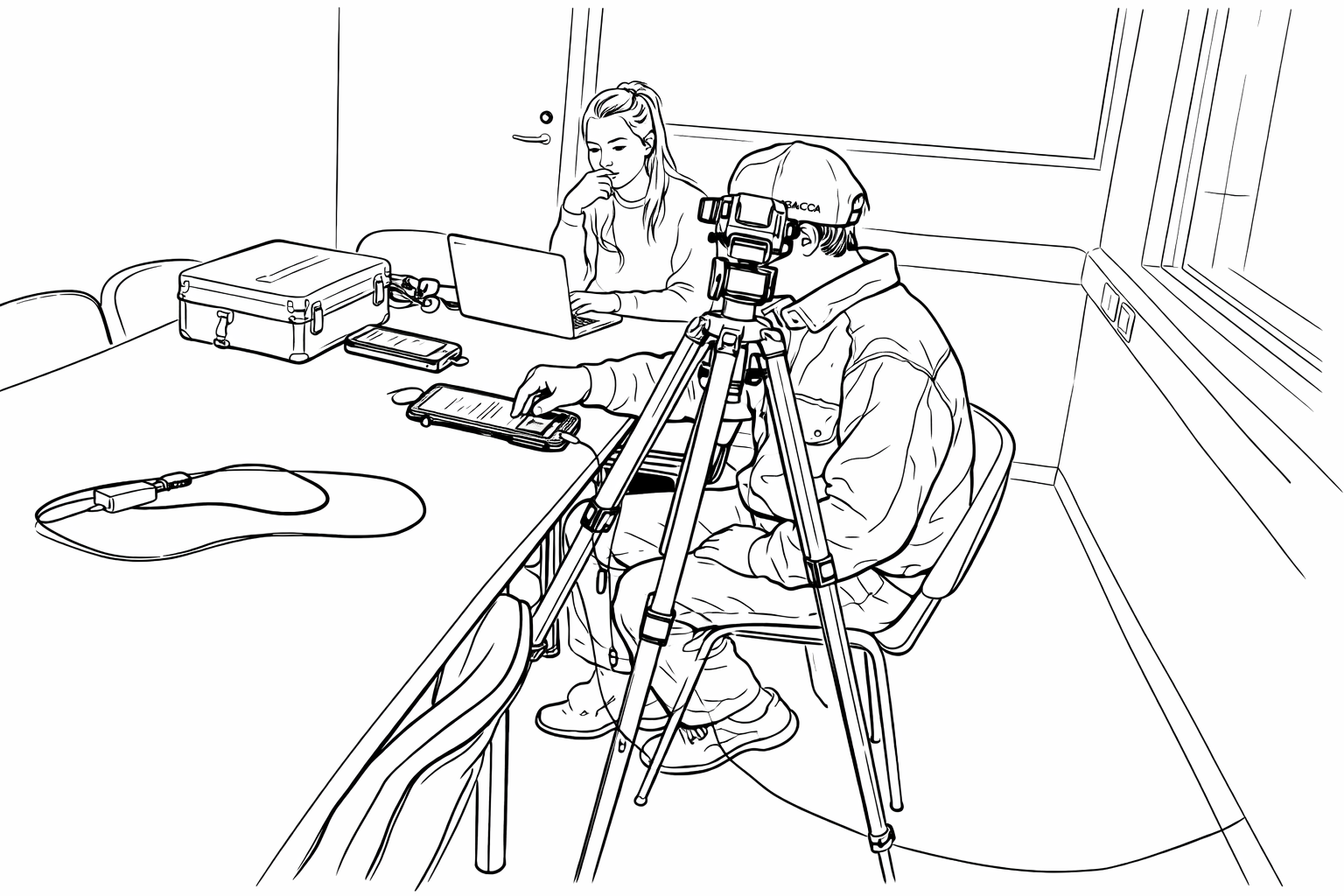
Usability testing
Usability testing for a new professional tool in development
Role: UX/UI Trainee — Usability Testing & Research
Context: New professional device · industrial environment
Core focus: Task-based sessions with professional users
Outcome: Prioritised findings · recommendations for next iterations
Duration: Aug - Oct 2025
This project is under NDA, so only the research approach and high-level takeaways are shared.
QUICK OVERVIEW
A product currently in development, refined through user testing with the target users.
This case focuses on the usability testing phase and the observations that informed the next design steps.
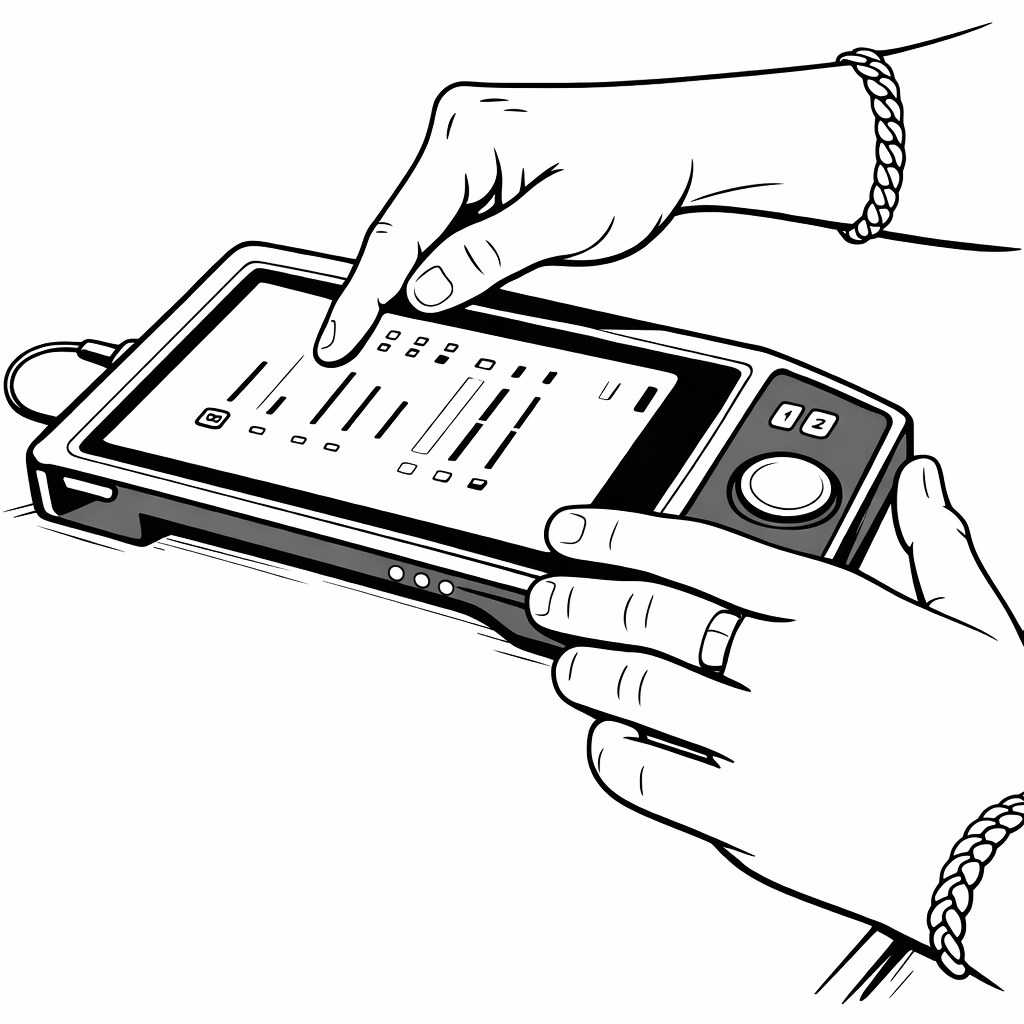
TEST PLANNING
Preparation
Aligned on goals, constraints, and terminology through project meetings
Reviewed the current UI and practiced existing workflows to ground realistic scenarios
Defined ~5 task themes and mapped alternative paths / edge cases to reflect real variations
DURING TESTING
Kept the session structure flexible and iterated tasks between sessions based on what surfaced
Adjusted facilitation to different communication needs (including non-verbal guidance when needed)
WHAT WE LEARNED
Early sessions surfaced a broad set of improvement areas.
As issues were addressed between iterations, usability findings decreased.
By the final test session, no further changes were identified based on user feedback.
A more detailed walkthrough will be shared once the NDA allows it.
OUTCOMES
Findings were consolidated into three groups: critical issues, usability improvements, and longer-term topics (e.g. ergonomics and physical placement).
Results were reviewed with the project team.
Several points were taken forward as concrete UX requirements for future design work.
MY LEARNINGS
Acting as the main facilitator across five sessions strengthened my confidence in running usability tests independently.
I improved at writing clear, realistic tasks for professional users and keeping sessions neutral while still comfortable for participants.
I developed a more reliable synthesis flow: turning raw notes into patterns, prioritising what matters, and producing a concise summary a cross-functional team can use.
This testing phase became a key learning milestone during my traineeship and a solid foundation for facilitating future sessions.